

For Flight Attendants
Catering, built around the cabin.
Per-passenger labels, reheat instructions in galley terms, and a single contact path day-of. Built for the people who actually serve the food.
- Per-passenger labels in plain English
- Reheat in galley terms: time, temp, mode
- Same caterer, multi-leg, prefs carried
Built for the galley, not the kitchen.
Per-passenger dietary docs.
Allergens, preferences, origin notes, printed on the container, not on a sheet that gets lost between the gate and the galley.
Reheat instructions in galley terms.
Oven mode, exact time, exact temp. Readable in galley lighting on a moving aircraft, not chef shorthand.
Course timing notes.
Written on the top label: when to chill, when to plate, when to serve. No mental math during service.
Aviation-spec packaging.
Stackable, cabin-altitude-tuned. Designed not to bruise on rotation or shift in turbulence.
Multi-leg continuity.
Same caterer carries through the trip. Brief once; preferences travel.
Day-of changes.
When the principal calls late or weather shifts the manifest, adapted without re-briefing the whole order.
How it actually arrives.
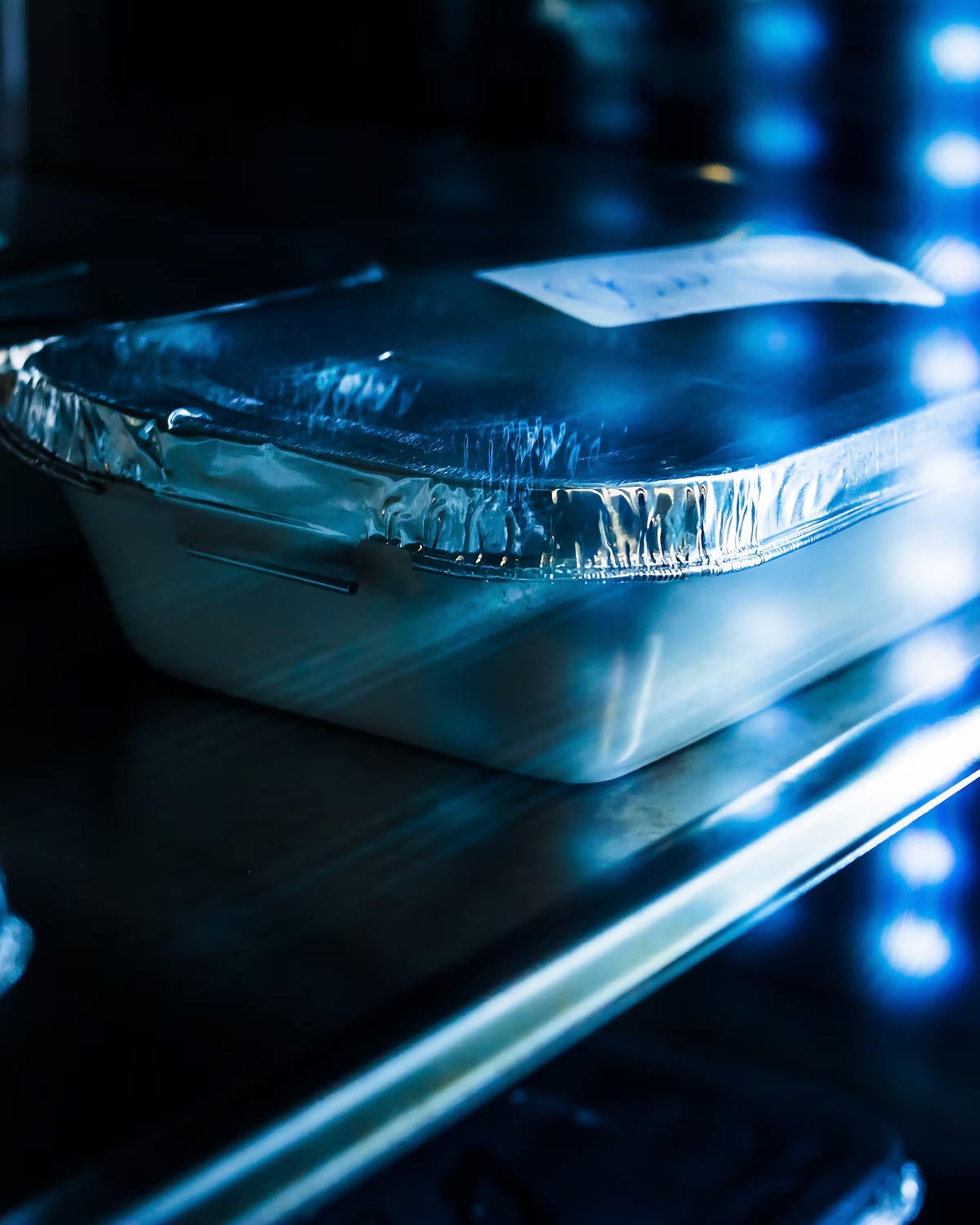
- 01Per-passenger labels, visible without opening
- 02Reheat instructions in galley terms, on the top label
- 03Course timing notes, also on the top label
- 04Allergen flags color-coded per passenger
- 05Crew briefing card with run-of-show
- 06Stackable hierarchy: cold/hot/sweet, top-down
One brief, the whole trip.
Multi-leg trips don't need to be multi-briefs. You tell us the trip once with passengers, preferences, principal notes, and the full manifest, and we execute it across every stop. Mid-trip resupply at FBOs runs from the same brief. And for principals you fly regularly, preferences carry between trips, so what they wanted last month is what's waiting next month, unless you tell us otherwise.
What flight attendants say.
“They had the reheat stuff right on the top label, time, temp, mode, all in galley terms. I wasn't squinting at a printout mid-service. By the time the entrée was up, I'd already plated.”
“Same caterer, same dispatcher, same prefs every leg. By leg three I'm not re-explaining the principal's coffee. That's the difference.”
“SkyDine answers the phone at 2am, gets the order plated right, and the cases land where they're supposed to. That's the whole job.”
Five answers.
Either way. FAs reach us directly by phone, WhatsApp, or the quote form on this site, and we'll loop in dispatch or the operator if the workflow requires it. If your flight department prefers all orders flow through dispatch, we follow that. We don't insert ourselves into your chain of command.
Standard catering lead time runs in hours, not days, and same-day requests are routine at most of the FBOs we cover most. Changes after the order is confirmed (added pax, swapped entrée, dietary correction) are handled until the order is in transit; once it's on the truck, anything we can adjust at FBO handoff, we will. TODO_FACTCHECK: confirm specific same-day cutoffs with Brody before launch.
Yes. Preferences, allergies, off-menu sourcing notes, plating conventions, all kept on file and applied to subsequent trips for the same principal unless you tell us otherwise. You shouldn't have to re-explain the coffee on every brief.
If it happens before the order's left our kitchen, we re-route the delivery to the new airport at no charge. If it happens mid-flight, we coordinate with the FBO at the diverted airport and the closest kitchen we can pull from to stage replacement catering on arrival. Day-of route changes are part of the job, not an exception.
One dispatcher per trip. Same person who confirms the menu, follows the order through prep and packaging, and is reachable by phone or WhatsApp from brief through wheels-up. No call trees, no handoffs.