
Airline catering · December 17, 2025
Top Airline Catering Companies Compared
How major airline caterers operate at commercial scale, and why private aviation needs a completely different model for menus, timing, and cabin service.
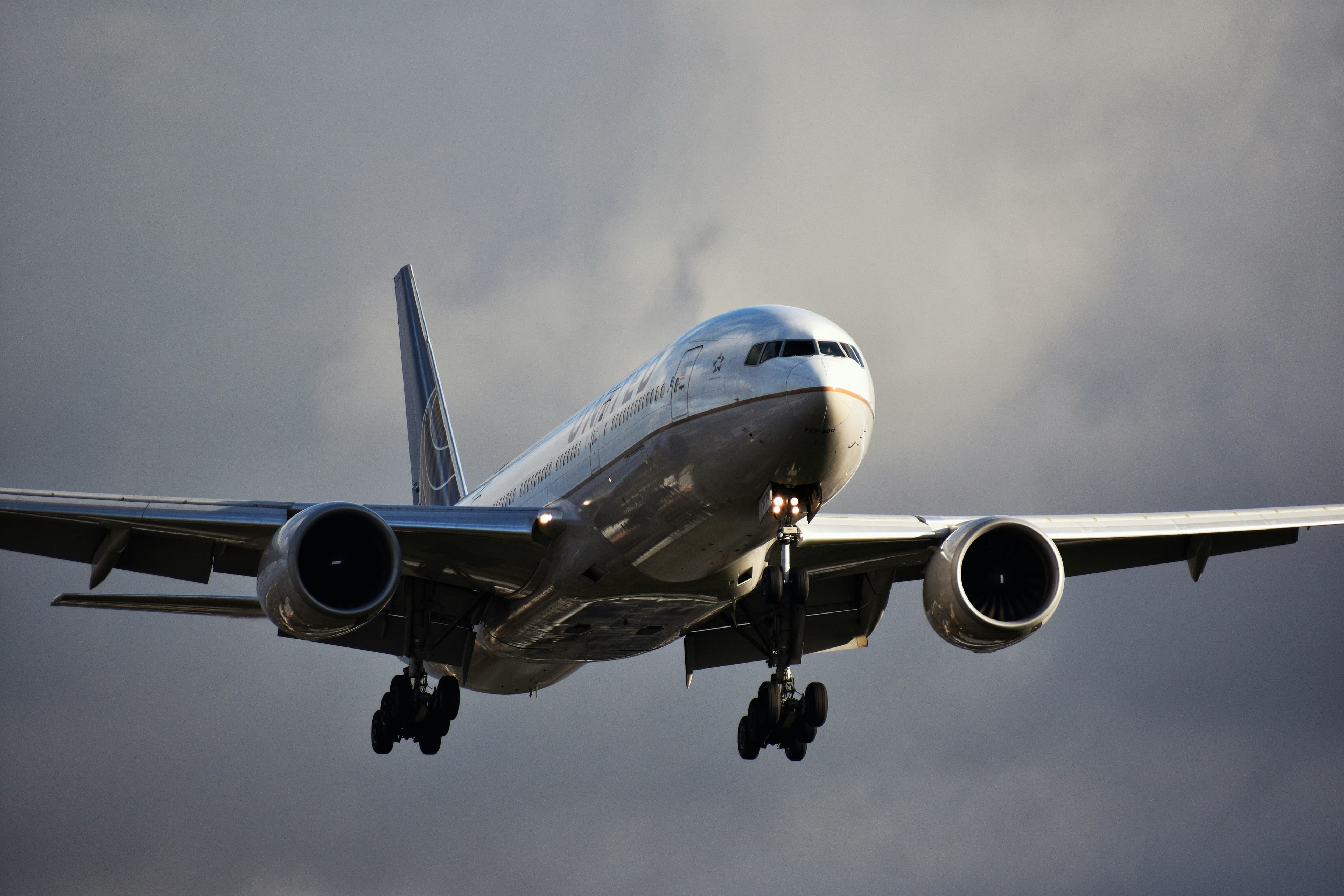
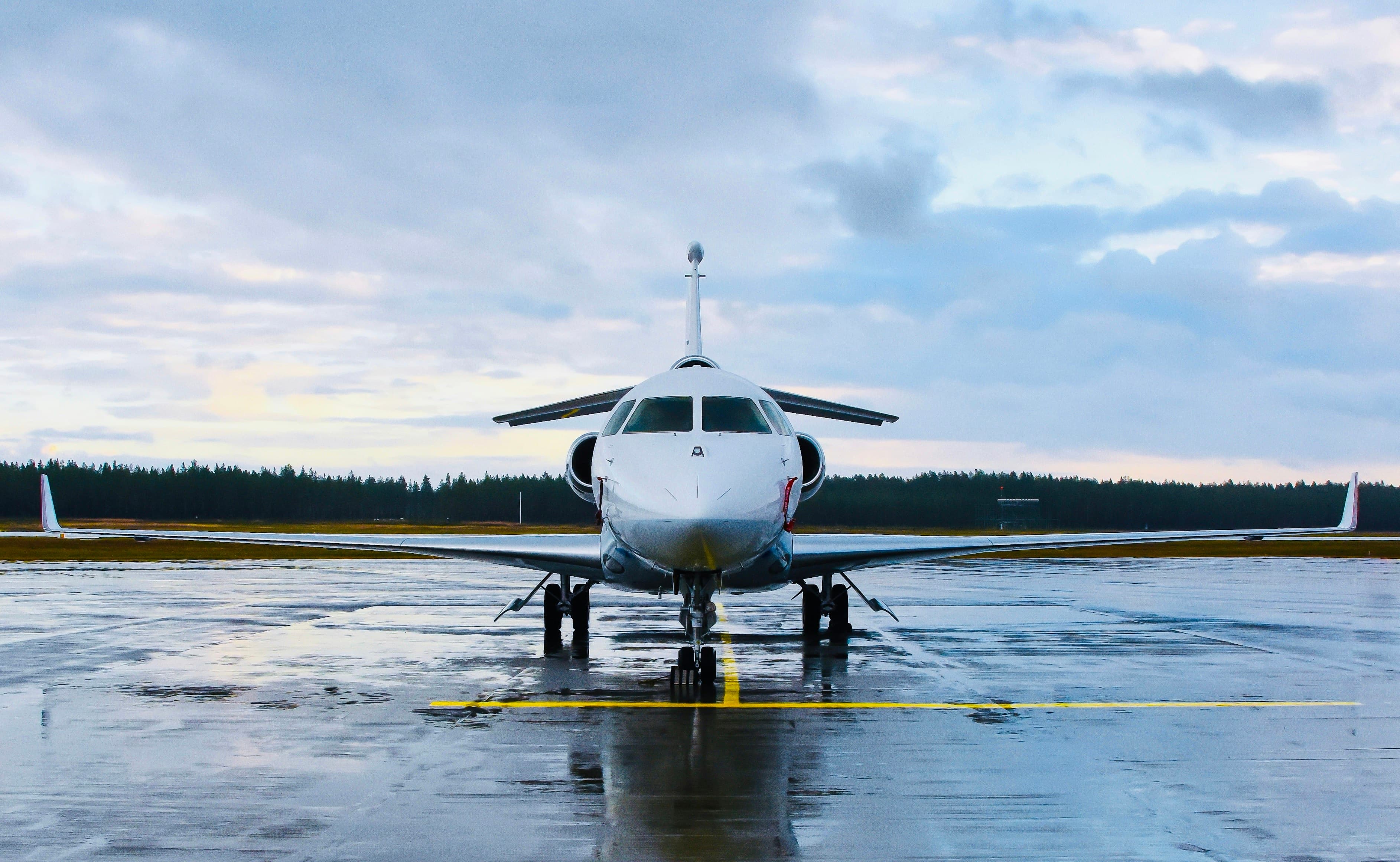
Commercial airline inflight catering operates at a scale private aviation never will: thousands of identical meals, hub kitchens, and long-term airline contracts. That model works for scheduled carriers. It is not the model that serves a Gulfstream departing Teterboro with four passengers, four different dietary briefs, and a wheels-up in three hours.
This guide explains how the major commercial airline caterers operate, and, more importantly, how private jet catering differs when flexibility, customization, and cabin-level service are the job.
How commercial airline catering works
The global airline catering industry is dominated by a handful of providers built for volume, consistency, and multi-station contracts. Understanding what they optimize for clarifies why private aviation needs a different partner.
| Provider | Scale & focus | Best suited for |
|---|---|---|
| LSG Sky Chefs | One of the largest global airline caterers; standardized menus across hundreds of airline partnerships | Full-service and regional commercial carriers on scheduled routes |
| gategroup | Integrated airline catering, onboard retail, and logistics across airline networks | Large commercial carriers with complex global operations |
| dnata Catering | Strong hub presence in the Middle East, Europe, Asia, and North America | International and long-haul airline operations at major airports |
| SATS | High-efficiency production across Asia-Pacific aviation hubs | Dense international markets and integrated ground handling |
| Newrest | Flexible programs in emerging markets, remote sites, and multi-sector food service | Challenging logistics environments and off-hub operations |
These companies excel at predictable volume. They are not structured around last-minute manifest changes, per-passenger labeling, or restaurant off-menu sourcing for a single departure.
Why private aviation catering is different
When passengers fly private, the meal is part of the product, not a cost line on a scheduled rotation. That shift changes everything:
- ·Menu starts with the passenger, not a cart insert. See our private jet catering menu for typical formats, or brief us off-menu entirely.
- ·Lead times are measured in hours, not days, though ordering early still saves money and opens options. Read how far in advance to order.
- ·Packaging and reheat instructions are written for the galley, not a cart service. Corporate flight attendants need labels, temps, and sequencing, not chef shorthand.
- ·Every leg can differ: passengers, aircraft type, oven capability, and FBO handoff all change the order.
SkyDine focuses exclusively on this environment: VIP private jet catering, charter and crew meals, and direct coordination with flight departments and cabin crew.
For flight attendants: a different skill set
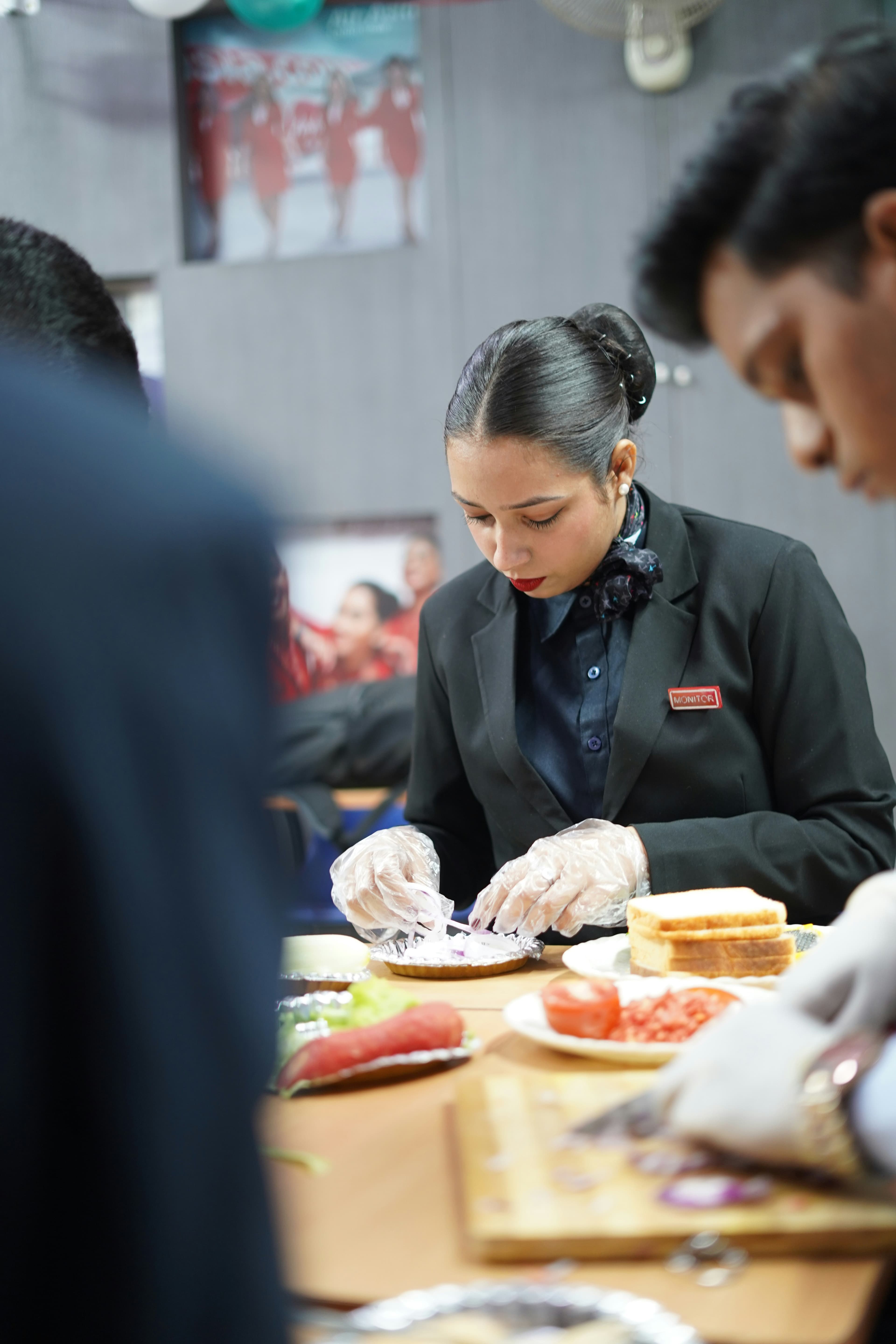
Commercial cabin crew mostly move trays. In business aviation, the flight attendant often sources the catering, manages dietary documentation, plates in a compact galley, and delivers a restaurant-caliber experience at altitude.
If you are building those skills, or comparing training programs, start with our flight attendant resources and the guide to corporate flight attendant culinary courses.
The bottom line
Commercial airline caterers move millions of meals efficiently. Private jet catering moves one flight at a time, with precision. If you are ordering for a charter, flight department, or cabin service, start with what private jet meals actually look like, then brief us when you are ready to dispatch.
Keep reading.
All posts →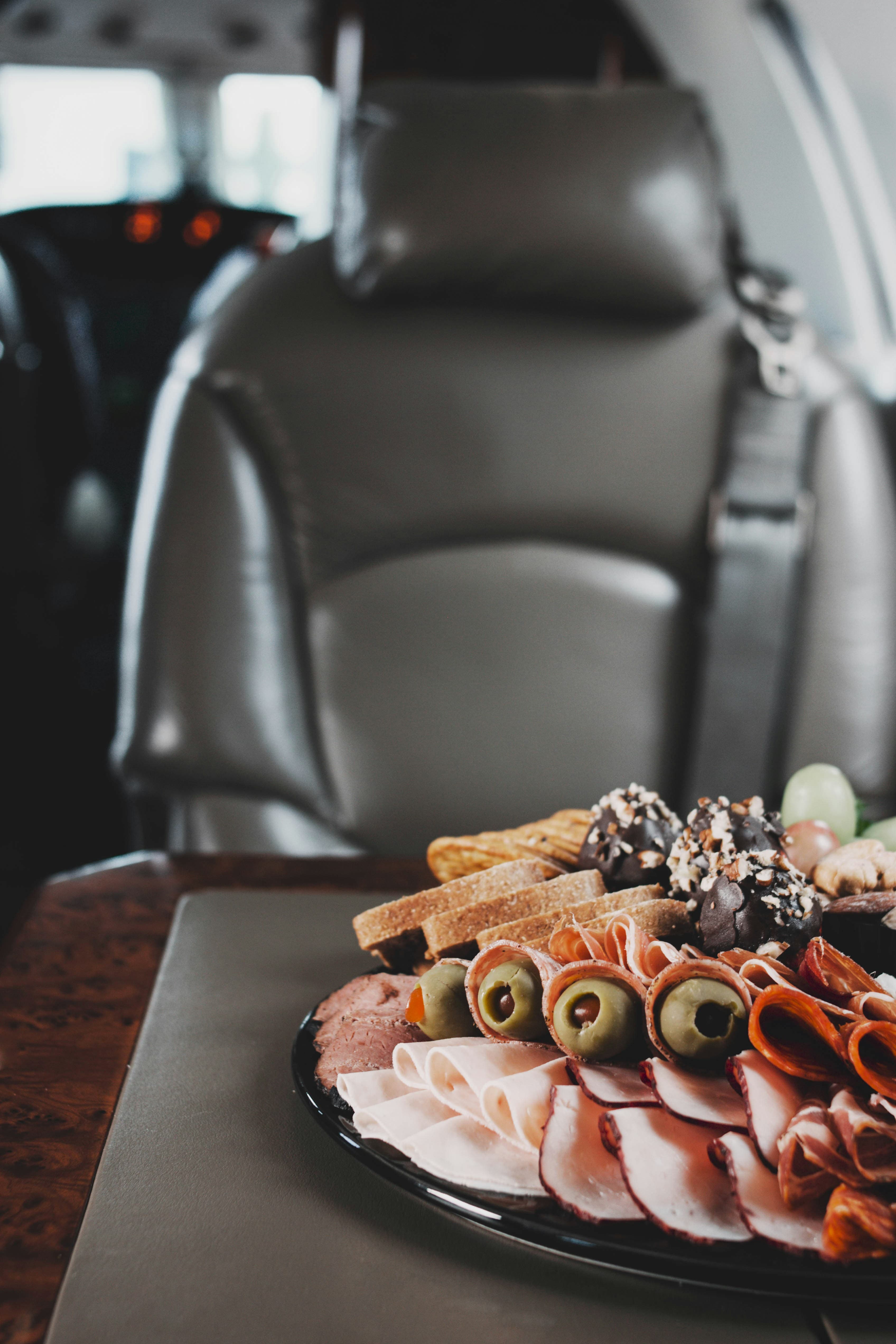
For flight attendants
Researching training or galley workflow?
SkyDine builds catering around the cabin with labels, reheat cards, and day-of contact. We also support corporate flight attendants pursuing culinary training through our DaVinci scholarship and Flight Attendant Award programs.